From Overwhelmed to Supported: How Little Memory Care Homes Assist Seniors Flourish
Business Name: BeeHive Homes of Grain Valley
Address: 101 SW Cross Creek Dr, Grain Valley, MO 64029
Phone: (816) 867-0515
BeeHive Homes of Grain Valley
At BeeHive Homes of Grain Valley, Missouri, we offer the finest memory care and assisted living experience available in a cozy, comfortable homelike setting. Each of our residents has their own spacious room with an ADA approved bathroom and shower. We prepare and serve delicious home-cooked meals every day. We maintain a small, friendly elderly care community. We provide regular activities that our residents find fun and contribute to their health and well-being. Our staff is attentive and caring and provides assistance with daily activities to our senior living residents in a loving and respectful manner. We invite you to tour and experience our assisted living home and feel the difference.
101 SW Cross Creek Dr, Grain Valley, MO 64029
Business Hours
Families seldom start their search for senior care from a place of calm. More often, it starts after a scare: a midnight fall, a pot left burning on the range, a parent who roamed 3 streets over and might not find the way back. By the time somebody says, "We require assistance," the household is already exhausted.
That is normally when the huge structures appear on the radar. Big assisted living communities with grand lobbies, numerous dining-room, and glossy sales brochures are highly noticeable. Small memory care homes, often in peaceful areas and converted single household homes, seldom market as loudly. Yet for many older adults living with dementia, these little homes are where real healing and thriving begin.
I have actually enjoyed both paths up close. I have seen citizens closed down in environments that were too loud, too hurried, and too unknown. I have likewise seen somebody who had actually stopped speaking start to hum along to a song in a calm, 10 bed memory care home kitchen while helping to stir cookie dough. The difference is not magic. It is about scale, structure, and attention.
This article looks carefully at how little memory care homes work, who they serve best, and what trade offs families need to understand before they choose.
What "little" really implies in memory care
The term "small" can be slippery in senior care marketing. Some companies explain a 60 resident building as "intimate." For clearness, let us specify a little memory care home as a residence that usually serves between 6 and 16 seniors, usually in a house or cottage that seems like a regular home.
You may see them called residential care homes, board and care homes, group homes, or small assisted living. Licensing classifications vary by state, however a couple of typical features usually appear:
Residents share a genuine living room, not a hotel design lobby. Meals are cooked in a normal kitchen, frequently within view of where residents invest their day. Bedrooms might be private or semi private, but hallways are short and sightlines are clear, which matters a lot for dementia care.
The smaller sized size does not simply change the appearance of the place. It changes the relationships inside it.
In large assisted living or memory care communities, it is not unusual for a caretaker to be accountable for 10 to 14 locals during a day shift, and even more in the evening. In a small home, ratios of 1 to 4 or 1 to 5 throughout waking hours are common in well run operations. That difference shows up in whatever from how long somebody waits to use the restroom to whether staff notification that a resident stopped consuming dessert this week, even though it utilized to be the favorite part of the meal.
Why scale matters so much in dementia care
Dementia impacts more than memory. It alters how somebody processes visual information, sound, and motion around them. Individuals who used to deal with a congested restaurant without blinking may now feel overloaded by a hectic dining hall. Long passages, patterned carpets, and constantly changing personnel can end up being a blur.
In that context, a little memory care home has actually numerous built in advantages.
First, there is consistency. With a limited variety of homeowners, the staff group tends to be smaller and more steady. The exact same 3 or 4 caregivers exist day after day. Homeowners with dementia typically recognize faces and voices long after they forget names. Familiarity decreases stress and anxiety. When a resident wakes from a nap puzzled, seeing the very same caretaker they saw at breakfast can make the difference in between a calm redirection and a complete panic.
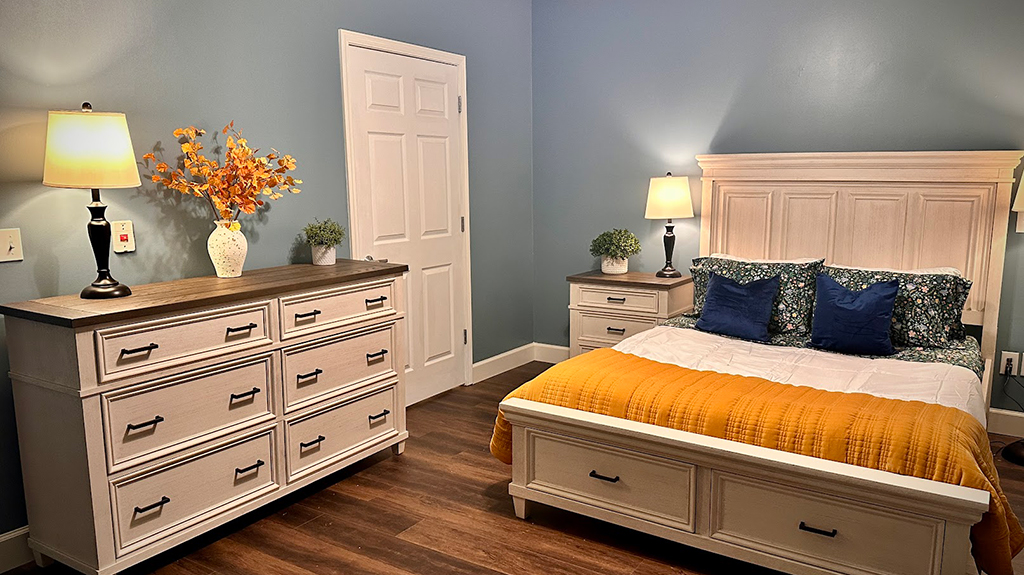
Second, the environment is simpler and much easier to browse. A couple of typical areas, an open cooking area, and plainly significant restrooms lower the number of decisions a resident should make to move through the day. Even simple information matter: a white toilet seat against a tan flooring, a contrasting plate color that makes food visible, a front deck where somebody can sit without the risk of wandering off school unnoticed.
Third, regular becomes a natural rhythm instead of a stiff schedule. In big structures, jobs need to be batched to remain effective. Breakfast is "from 7 to 8:30," showers are appointed to specific days, and personnel needs to press to keep everyone on time. In a little home, there is more room to honor individual patterns: the late riser who desires coffee at 9:30, the early riser who likes to fold towels at dawn, the individual who constantly cleaned dishes after dinner and still finds comfort in that task.
None of this eliminates the progression of dementia. It does, however, lower the day-to-day friction that so often causes agitation, "habits problems," or overuse of sedating medications.
Moving from crisis management to real support
Families usually begin looking for care because something has actually gone wrong. A mother who constantly handled expense paying all of a sudden starts missing payments. A father with early Alzheimer's gets lost while driving a familiar route. A partner can not supply 24 hr supervision any longer. At that stage, it is natural to believe in regards to danger control: avoiding falls, preventing medication errors, stopping wandering.
Small memory care homes deal with those security concerns, but their stronger worth lies in a more human question: How can this individual still live a real life, inside their new limits?
One daughter I worked with had been taking care of her 82 year old father in your home for 3 years. He had moderate dementia and Parkinson's. She was rising at 5 a.m. To assist him out of bed, managing his medications, handling the finances, and holding a part-time task. By the time she called for assistance, she was sleeping in 90 minute portions and crying in the pantry so he would not see her. She told me, "I simply require a place where he will be safe."
He moved into a small, 10 resident memory care home not far from their neighborhood. Safety needs were met quickly: get bars, guidance, medication administration, kept track of exits. What struck the child 2 weeks later was not the devices. It was walking in one afternoon to find her father sitting at the cooking area table with two other locals, carefully snapping the ends off green beans. He was talking with a caregiver about the garden he utilized to keep.
"He has actually not looked that engaged in a year," she said. "I believed we were done with that part of him."
The shift from overwhelmed to supported takes place for families along with locals. When a trusted team shares the minute by minute responsibility, partners and adult kids can end up being visitors again rather of tired full time caretakers. That reset often repair work strained relationships. The daughter might now sit and browse old photo albums with her dad without worrying about his next dose of medication.
How little homes differ from conventional assisted living
Many households ask whether a loved one need to move into basic assisted living or specifically into memory care. The answer depends on the person's needs, their phase of dementia, and their character long before they had any cognitive decline.
Assisted living is usually designed for seniors who need assist with some activities of daily living, such as bathing, dressing, or handling medications, however who do not have major wandering or habits issues. Homeowners may have moderate cognitive problems or very early dementia, yet still function individually in numerous ways.
General assisted living settings frequently have:
Large communal dining-room with set meal times. Set up group activities like bingo, movies, or outings. Apartment or condos with kitchen spaces and locking doors. Variable staff training in dementia care.
In contrast, dedicated small memory care homes are customized to people who have moved further along the dementia spectrum. They focus on guidance, structure, and cueing. Doors are typically secured, many items are simplified for safety, and stimulation is intentionally moderated.
Key differences in daily life include the way activities are integrated. In a big assisted living structure, activities are usually arranged by a recreation director and happen at set times in particular spaces. In a little home, much of what would be called "activities" just happens together with everyday tasks: folding laundry together, shredding lettuce, measuring sugar, sweeping a patio area, listening to old music while personnel prepare snacks.
Families sometimes stress that a small home will mean fewer official occasions. What typically disappears are the loud, crowded occasions that many homeowners with dementia might not truly follow anyway. In their location come multiple small, sensory abundant moments that match a resident's attention period and energy level.
That said, there are trade offs. Bigger assisted living or memory care communities might provide on website physical treatment, bigger outdoor areas, or specialized programs for art and music led by outdoors experts. For friendly citizens in earlier phases of dementia, that range can match them well. Some households begin in large assisted living with a memory beehivehomes.com memory care home care wing, then shift to a smaller home when the illness progresses and the environment becomes overwhelming.
The emotional environment: quieter, however not silent
A well run little memory care home has a specific noise. You observe some soft conversation, a radio with requirements or oldies in the background, the sizzle of something cooking, maybe a bird feeder outside the window. You do not hear chairs scraping in a hundred seat dining-room, or intercom statements, or a vacuum running constantly.
For many people with dementia, that quieter backdrop lets them remain present. They can track a discussion. They are less surprised by unexpected noises. Corridors are short, so a resident calling out is heard and reacted to rapidly instead of echoing unanswered.
The quieter environment likewise affects staff. Caregivers are more detailed to one another, not spread throughout several floorings. Supervisors can see and hear what is occurring in real time. That intimacy develops accountability. A frazzled aide in a huge structure can feel confidential and unsupported. In a 10 person home, aggravation is seen quickly and dealt with before it ends up being burnout.
The psychological climate does depend greatly on the management. A little home can feel warm and familial, or tense and controlling, depending on how the administrator treats both homeowners and staff. When you tour, pay as much attention to body language and tone as to décor. Staff who carefully reroute a confused resident, who know the story behind the wedding event photo on the bedside table, and who joke kindly with one another are strong signs of a healthy culture.
Respite care in small memory homes
Not every family is prepared for an irreversible move. Some are checking the waters of senior care. Others simply require a break to rest, travel, or deal with medical problems of their own. This is where respite care enters the picture.
Respite care is brief term, typically anywhere from a few days to several weeks. A little memory care home that provides respite can provide families a protected trial duration. The resident gets used to a brand-new environment, and the staff learns their practices and choices, without the psychological weight of "this is forever."
I often motivate households to use respite care before everyone is in crisis. A week long stay after a prepared surgical treatment for the primary caretaker is much easier on the resident than an emergency situation admission after their caretaker collapses from exhaustion. It likewise provides the household a clear sense of how their loved one makes with structured dementia care: Does roaming reduce? Does sleep enhance? Exist less angry outbursts when personal care is supplied by someone outside the family?
Many partners return from that first respite stay amazed by the change in their own body. They sleep deeply for the very first time in months. Their blood pressure boils down. Their perseverance returns. When they pick up their loved one at the end of the respite duration, they can see more plainly what the future needs, whether that indicates ongoing home care, another respite in a few months, or a relocation into long term care.
When investigating respite care options, ask very specific questions: Is the respite visitor consisted of in all activities or kept different? Exist extra costs beyond the day-to-day rate? How are medications managed, particularly if there are as required prescriptions for stress and anxiety or agitation? In a little home, respite spots can be restricted, so preparing ahead matters.
Signs a little memory care home may be the right fit
Families often hesitate to approach what sounds like a more "intensive" setting such as memory care. They hope assisted living with some extra assistance will be enough, or that more hours of in home assistance can fix the problem. There is nobody response, however certain patterns suggest that a little memory care home might be worth major consideration.
Here are some of the common indications:
- The person has wandered or attempted to leave home, and supervision is required around the clock.
- Bathing, dressing, or toileting regularly lead to arguments or physical resistance, even with familiar caregivers.
- The present assisted living setting is providing cautions or recommending that they "may not be appropriate" for the level of care offered.
- The main caretaker is sleeping badly, feels not able to leave the house, or is neglecting their own medical needs.
- Hallucinations, severe stress and anxiety, or late day agitation ("sundowning") are increasing, and redirecting at home is no longer working.
None of these automatically suggests a relocation should happen tomorrow. They do, nevertheless, signal that the existing arrangement is stretching everyone to the limitation. Exploring a few little homes before things reach a boiling point provides you more choices and more time to weigh them.
What great dementia care appears like in a small setting
Quality dementia care is not about having the fanciest structure or the current electronic gadgets. In small memory care homes that truly assist locals thrive, numerous useful components appear consistently.
Care is individualized, not one size fits all. Staff know who is relaxed by folding towels, who reacts best to music from the 1950s, who requires an additional treat before bed to sleep well, and who chooses a bath to a shower. That understanding is written down, shared throughout shifts, and upgraded as the illness progresses.
Communication is respectful and concrete. Instead of "Do you wish to get dressed now?" which can overwhelm somebody with options, you hear "Let us put on your blue shirt, then we will have breakfast." Personnel do not argue with delusions. If a resident is encouraged they need to pick up their children at school, an excellent caretaker may state, "The school called, and they are staying for an extra activity. Let us have some tea while we wait," then shift to a familiar task.
Risk is handled, not erased. Complete safety is not realistic for anybody. In a small home, the goal is affordable security with meaningful life. That may indicate allowing a resident with moderate dementia to help in the garden with supervision, even if there is a minor risk of tripping, instead of parking them in front of the television all afternoon.
Families are partners, not onlookers. Staff routinely request for stories about the resident's past, favorite routines, or household customs. Pictures and biography boards are used as conversation prompts. Households are invited to sign up with for meals or activities when they can, and their observations are taken seriously in care planning.
When those aspects line up, small memory care homes can support surprising moments of pleasure: a previous librarian reading aloud from a familiar book, a retired nurse assisting to "train" a brand-new team member in taking a pulse, a long-lasting garden enthusiast deadheading flowers on the patio.
Questions to ask when exploring little memory care homes
Brochures and websites will just inform you so much. The real test is what you see, hear, and feel when you walk through the front door. To make your visits more productive, it helps to have a concise set of questions that cut through marketing language and get at daily reality.
Consider asking:
- What is your normal staff to resident ratio on days, evenings, and nights, and who is in fact in the building throughout those times?
- How do you train staff in dementia care, and how frequently do they receive continuous education?
- Can you explain how a common day unfolds for somebody at my parent's stage of dementia, from waking up to bedtime?
- How do you manage medical problems after hours, and which physicians or nurse specialists recognize with your residents?
- How do you involve households in care choices, and how will you interact with me if something changes?
While you ask, observe silently too. Do staff call locals by their preferred name? Are people dressed in clean, seasonally proper clothing? Do you see residents being carefully motivated to eat and drink, or are plates left untouched? Is there a smell of urine that recommends chronic incontinence concerns are not managed well?
Your impulses matter. If you leave a tour with a tight sensation in your stomach, even if everything sounded fine on paper, pay attention to that. Conversely, if you discover yourself exhaling and thinking, "I might sit here with my mom and have coffee," that is also beneficial data.
Balancing expense, access, and values
Cost is typically the hardest useful piece. Little memory care homes can be comparable to, or in some cases a little more expensive than, bigger assisted living communities that use memory care units. They seldom accept Medicaid in the early stages of a stay, though some will enable citizens to transform as soon as they have actually lived there for a specific period and a bed is available.
Families likewise need to consider location. A stunning small home an hour away might look enticing, but distance endures both homeowners and visitors. Having the ability to drop in for 30 minutes after work, or bring grandchildren for Sunday afternoon visits, supports emotional health on both sides.
Values matter as much as features. Some families put a high top priority on faith based environments. Others desire a multilingual personnel. Some expect a home that invites animals, or has a strong focus on outdoor time. Clarifying what truly matters to your loved one, and to you, will help narrow the field.
Where little homes shine is alignment in between environment and the truth of dementia. The closer a setting matches the person's present capabilities and needs, the more room there is for convenience, self-respect, and small daily pleasures.
From enduring to living
Caring for a loved one with dementia is never basic. Even the best small memory care home will not remove the sorrow of viewing somebody change, or the hard choices along the way. What it can do, at its best, is relocation everyone from consistent crisis management into a more sustainable, humane rhythm.
For the resident, that might appear like days filled with routine, mild business, and work that feels purposeful, even if it is simply sorting napkins. For the household, it might indicate sleeping through the night, reclaiming their own medical visits, or being able to bring grandchildren to visit without fretting that a boiling pot is unattended in the kitchen.
The shift from overwhelmed to supported does not originate from one grand gesture. It originates from a hundred little, repetitive acts of care, delivered in a setting that is sized to notice them. Small memory care homes, when well selected and well run, provide precisely that kind of setting, where seniors with dementia can still do more than exist. They can, within their changing world, genuinely thrive.
BeeHive Homes of Grain Valley provides assisted living care
BeeHive Homes of Grain Valley provides memory care services
BeeHive Homes of Grain Valley provides respite care services
BeeHive Homes of Grain Valley offers 24-hour support from professional caregivers
BeeHive Homes of Grain Valley offers private bedrooms with private bathrooms
BeeHive Homes of Grain Valley provides medication monitoring and documentation
BeeHive Homes of Grain Valley serves dietitian-approved meals
BeeHive Homes of Grain Valley provides housekeeping services
BeeHive Homes of Grain Valley provides laundry services
BeeHive Homes of Grain Valley offers community dining and social engagement activities
BeeHive Homes of Grain Valley features life enrichment activities
BeeHive Homes of Grain Valley supports personal care assistance during meals and daily routines
BeeHive Homes of Grain Valley promotes frequent physical and mental exercise opportunities
BeeHive Homes of Grain Valley provides a home-like residential environment
BeeHive Homes of Grain Valley creates customized care plans as residents’ needs change
BeeHive Homes of Grain Valley assesses individual resident care needs
BeeHive Homes of Grain Valley accepts private pay and long-term care insurance
BeeHive Homes of Grain Valley assists qualified veterans with Aid and Attendance benefits
BeeHive Homes of Grain Valley encourages meaningful resident-to-staff relationships
BeeHive Homes of Grain Valley delivers compassionate, attentive senior care focused on dignity and comfort
BeeHive Homes of Grain Valley has a phone number of (816) 867-0515
BeeHive Homes of Grain Valley has an address of 101 SW Cross Creek Dr, Grain Valley, MO 64029
BeeHive Homes of Grain Valley has a website https://beehivehomes.com/locations/grain-valley
BeeHive Homes of Grain Valley has Google Maps listing https://maps.app.goo.gl/TiYmMm7xbd1UsG8r6
BeeHive Homes of Grain Valley has Facebook page https://www.facebook.com/BeeHiveGV
BeeHive Homes of Grain Valley has an Instagram page https://www.instagram.com/beehivegrainvalley/
BeeHive Homes of Grain Valley won Top Assisted Living Homes 2025
BeeHive Homes of Grain Valley earned Best Customer Service Award 2024
BeeHive Homes of Grain Valley placed 1st for Senior Living Communities 2025
People Also Ask about BeeHive Homes of Grain Valley
What is BeeHive Homes of Grain Valley monthly room rate?
The rate depends on the level of care needed and the size of the room you select. We conduct an initial evaluation for each potential resident to determine the required level of care. The monthly rate ranges from $5,900 to $7,800, depending on the care required and the room size selected. All cares are included in this range. There are no hidden costs or fees
Can residents stay in BeeHive Homes of Grain Valley until the end of their life?
Usually yes. There are exceptions, such as when there are safety issues with the resident, or they need 24 hour skilled nursing services
Does BeeHive Homes of Grain Valley have a nurse on staff?
A consulting nurse practitioner visits once per week for rounds, and a registered nurse is onsite for a minimum of 8 hours per week. If further nursing services are needed, a doctor can order home health to come into the home
What are BeeHive Homes of Grain Valley's visiting hours?
The BeeHive in Grain Valley is our residents' home, and although we are here to ensure safety and assist with daily activities there are no restrictions on visiting hours. Please come and visit whenever it is convenient for you
Do we have couple’s rooms available?
Yes, each home has rooms designed to accommodate couples. Please ask about the availability of these rooms
Where is BeeHive Homes of Grain Valley located?
BeeHive Homes of Grain Valley is conveniently located at 101 SW Cross Creek Dr, Grain Valley, MO 64029. You can easily find directions on Google Maps or call at (816) 867-0515 Monday through Sunday Open 24 hours
How can I contact BeeHive Homes of Grain Valley?
You can contact BeeHive Homes of Grain Valley by phone at: (816) 867-0515, visit their website at https://beehivehomes.com/locations/grain-valley, or connect on social media via Facebook or Instagram
Butterfly Trail Park offers a quiet outdoor setting where assisted living, memory care, senior care, elderly care, and respite care residents can enjoy gentle walks and fresh air close to home.